Abitare la soglia / Living the Threshold

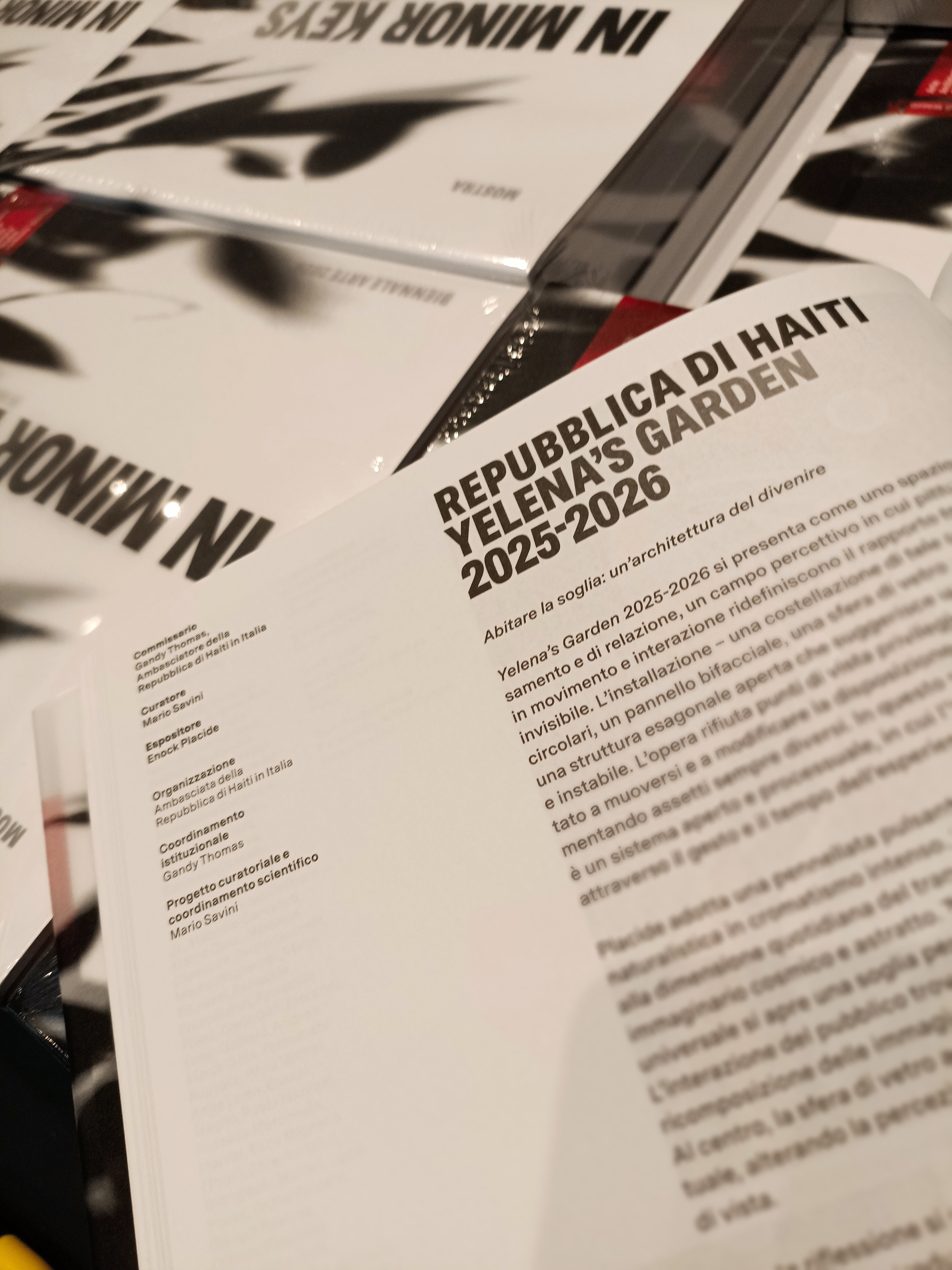
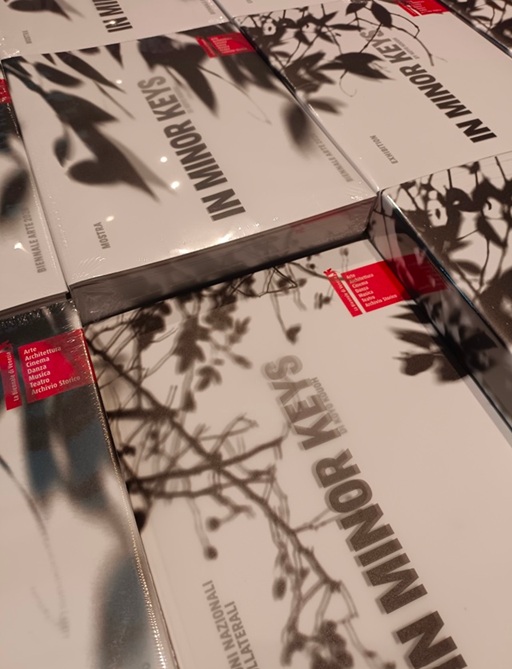
Abitare la soglia: un’architettura del divenire è il mio testo curatoriale che introduce l’opera di Enock Placide nel catalogo ufficiale della 61ª Biennale d’Arte di Venezia. Il testo accompagna il progetto Yelena’s Garden presentato dal Padiglione della Repubblica di Haiti e approfondisce alcuni temi centrali dell’installazione: la trasformazione continua dello spazio, la partecipazione del pubblico e il rapporto tra percezione, temporalità e dimensione relazionale dell’opera. Il catalogo ufficiale della Biennale è disponibile anche online sul sito de La Biennale Store.

Living the Threshold: An Architecture of Becoming is my curatorial text introducing the work of Enock Placide in the official catalogue of the 61st Biennale d’Arte di Venezia. The text accompanies Yelena’s Garden, presented by the Haiti Pavilion, and explores some of the installation’s central themes: the continuous transformation of space, audience participation, and the relationship between perception, temporality, and the relational dimension of the artwork. The official Biennale catalogue is also available online through the La Biennale Store.
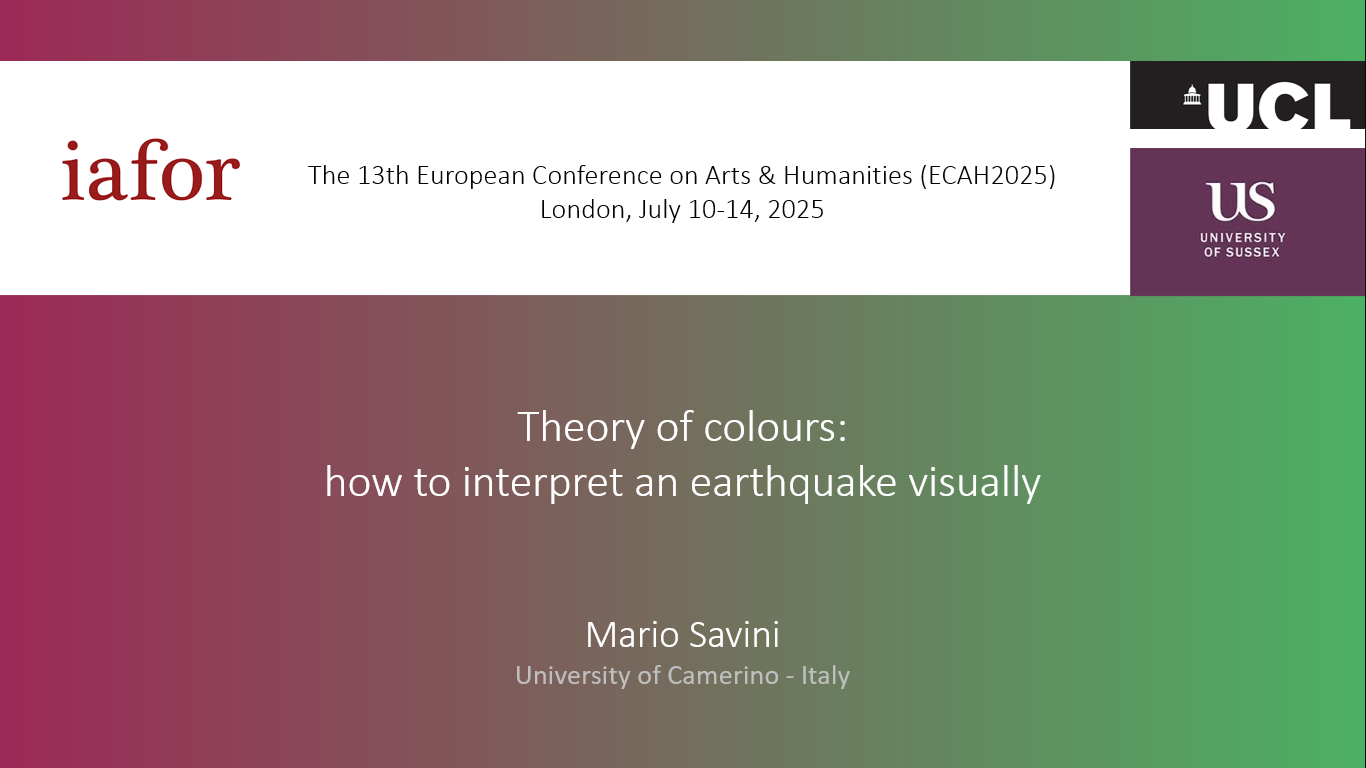
A Visual Theory of Earthquakes: From Research to Presentation at University College London

From July 10 to 14, I will be at University College London for the 13th Scientific Conference on Arts and Humanities. On this occasion, I will present a visual theory that explores how colour can be used to interpret and communicate the dynamics of earthquakes. The conference offers a unique opportunity to engage in meaningful dialogue with researchers and scientists from around the world, exploring the intersection between art, science, and the languages we use to describe the forces of nature.
Read my abstract here!

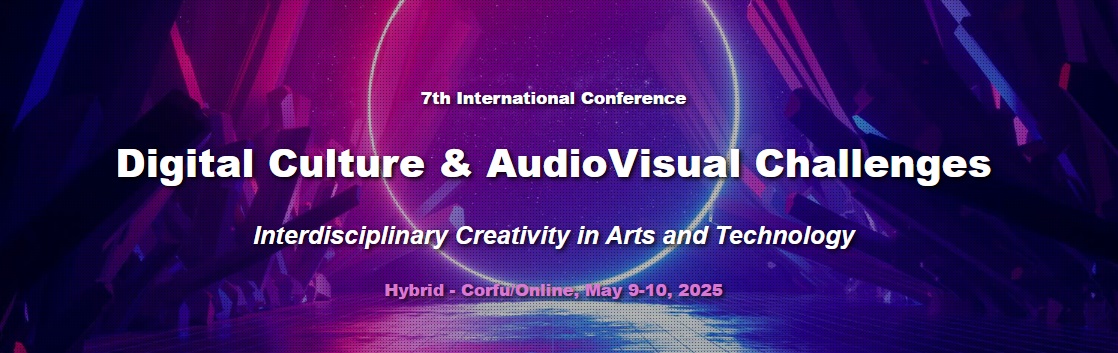
Living Data: Posthuman Aesthetics at DCAC 2025

From May 9 to 10, I will participate in the 7th International Conference Digital Culture & AudioVisual Challenges at the Ionian University of Corfu. I will present the project Living Data. Digital art between perception and biological hybridization. Through the analysis of digital and interactive artworks, this research explores new forms of posthuman aesthetics, where “vision” becomes a dynamic, relational experience mediated by data. Info ➡️ https://avarts.ionio.gr/dcac/2025/en/speakers/2851/

Mediterranean University Montenegro, 5-6 December 2023. International conference. Art as a Reflection of Society: Role of Art in Shaping Culture and Sparking Social Change

On 5th December I’ll partecipate in an international conference “Art as a Reflection of Society” at the Mediterranean University of Podgorica. My speech is titled “Transgenic art. A new nature as an aesthetic experience”. Here is the program!

Nomadismo culturale. Alla ricerca delle fonti del “sellotape selfie”

Ecco cos’è il “sellotape selfie”. Puoi leggere il mio articolo su Between Journal, la rivista scientifica dell’Università di Cagliari.

This is what “sellotape selfie” is! You can read my paper in Between Journal, the scientific magazine of the University of Cagliari.

Wes Naman

Wes Naman

Abstract

L’articolo propone una riflessione sul “nomadismo culturale” inteso come interscambiabilità dei ruoli dell’artista e dello spettatore: con la diffusione delle nuove tecnologie e delle reti informatiche sembra impensabile poter contrapporre all’arte la non-arte in quanto l’opera è riuscita a dilatare i confini della propria rappresentazione per immergersi nell’esperienza della vita. Esempio di tale sconfinamento è il “sellotape selfie”, la condivisione sui social network di un autoritratto fotografico con il viso deformato da giri di nastro adesivo trasparente, un fenomeno che ha iniziato a diffondersi tramite Facebook nella primavera del 2014. Qui si presentano le opere di importanti artisti contemporanei al fine di indagare le fonti di questa pratica performativa.

Full text